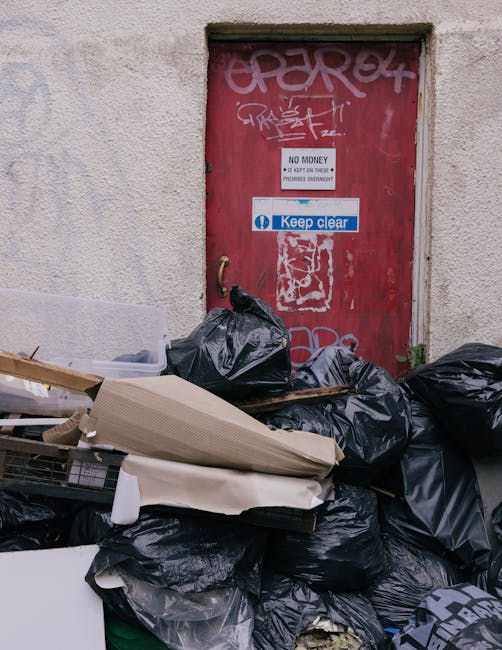
What to know about Westminster Council bulky waste rules
If you have an old sofa in the hallway, a broken wardrobe in the spare room, or a fridge that has been quietly taking up space since last winter, you are not alone. Bulky waste is one of those jobs that sounds simple until you actually try to book it. This guide on What to know about Westminster Council bulky waste rules walks you through the basics in plain English, so you can figure out what the council will take, what it will not, what to do with awkward items, and when a private clearance service makes more sense. Truth be told, the small print matters here.
You will also find a practical checklist, a comparison of common disposal options, and a few real-world examples to help you avoid the usual last-minute headaches. If you are trying to clear a flat, a house, a loft, or just one stubborn item that will not fit in the lift, this should make things much easier.
Table of Contents
- Why Westminster Council bulky waste rules matter
- How the bulky waste process works
- Key benefits and practical advantages
- Who this is for and when it makes sense
- Step-by-step guidance
- Expert tips for better results
- Common mistakes to avoid
- Tools, resources and recommendations
- Law, compliance, standards, or best practice
- Options, methods, or comparison table
- Case study or real-world example
- Practical checklist
- Conclusion
- Frequently asked questions
Why Westminster Council bulky waste rules matter
Bulky waste rules matter because they tell you what is acceptable, how items should be presented, and which route is most suitable for the type of waste you have. In Westminster, that is especially useful because many homes are in mansion blocks, conversions, or compact flats where access can be tight and storage space is limited. A sofa on the pavement might look like a quick fix. Usually, it is not.
For residents, the rules help reduce missed collections, avoid unnecessary fees, and keep common areas tidy and safe. For landlords, letting agents, and managing agents, they also reduce complaints from neighbours who are understandably tired of seeing mattresses propped against railings for a week. And if you are moving out, the last thing you want is a collection problem slowing down the handover.
There is also a wider responsibility angle. Bulky items often contain materials that need sorting, recycling, or special handling. That includes wood, textiles, metal, electrical components, refrigerants, and sometimes hazardous parts. So even if the item looks like "just rubbish", the disposal route can still matter a great deal.
Expert summary: Westminster Council bulky waste rules are mainly about access, item type, preparation, and booking. If you get those four things right, the process is much smoother.
How Westminster Council bulky waste rules works
The council route is typically designed for larger household items that are too big for normal bins. Think wardrobes, beds, sofas, tables, and similar household bulky goods. The exact acceptance rules can change, so it is always wise to check the current guidance before you book. That bit sounds obvious, but people skip it all the time and then wonder why the collection does not go ahead.
In practical terms, the process usually involves identifying the items, checking whether they are accepted, booking a collection slot, and then making sure the items are ready on the agreed day. Readiness matters. If the crew cannot safely access the items, or if they are blocked by locks, stairs, parked cars, or other obstacles, the collection may be delayed or refused.
It also helps to separate bulky waste from other waste streams. A damaged chest of drawers is not the same as builders' rubble, and an old filing cabinet is not the same as confidential documents. For business or mixed-use premises, you may need something more tailored such as business waste removal or office clearance rather than a standard household bulky collection.
When the item is not suitable for council collection, a private service can be the cleaner option. That is especially true for mixed loads, multiple floors, or awkward access. If you are clearing several rooms, a broader service like home clearance or house clearance may be more practical than trying to piece everything together one item at a time.
What usually counts as bulky waste
- Sofas, armchairs, and other large furniture
- Beds, headboards, and mattresses
- Wardrobes, tables, chairs, and shelving
- Some white goods and appliances, depending on the service route
- Large household items that cannot fit in a standard bin
What often causes problems
- Items left in the wrong place or at the wrong time
- Mixed waste that includes prohibited materials
- Large objects that are not dismantled when required
- Access issues in blocks, basements, or narrow stairwells
- Waiting too long and dealing with a rushed move-out
Key benefits and practical advantages
Following the rules properly does more than keep you compliant. It also saves time, avoids back-and-forth, and reduces the chance of items being left behind on collection day. That is a small mercy when you are juggling work, a move, or family life.
One of the biggest advantages is predictability. If you know the council's expectations, you can plan around them instead of improvising at 8:00 a.m. with a mattress wedged in the hall. Another benefit is cost control. Council collection can be suitable for a single item or a modest amount of bulky waste, while larger clearances may be better handled in one visit by a private team. The point is not to choose the flashiest option. It is to choose the one that fits.
You also protect shared spaces. In Westminster, where many buildings have communal entrances, lifts, and footpaths, poor waste handling can annoy neighbours very quickly. Getting it right helps keep the building civil, which is worth something in itself.
If the items are mainly furniture, you may also want to look at specific services such as furniture clearance or furniture disposal. For larger upholstered pieces, mattress and sofa disposal can be a more targeted route. Small difference, but in practice it often means fewer delays.
Who this is for and when it makes sense
This topic matters to a broad mix of people. If you live in a Westminster flat and need rid of a broken bed, it matters. If you are clearing a rental before a new tenancy begins, it matters. If you are a landlord trying to reset a property after a long occupancy, it matters. If you manage offices or small commercial premises, it matters even more because commercial waste tends to become mixed very quickly.
It also matters when the job has a deadline. End-of-tenancy move-outs, probate clearances, refurbishments, and "we need this gone by Friday" moments tend to expose every weakness in planning. I have seen people leave the bulky waste conversation until the very end, only to realise the lift is too small, the booking window is gone, and the council collection will not happen before keys are handed back. Not ideal.
For lofts, garages, and storage areas that have become a kind of museum for forgotten furniture, a more comprehensive clearance is often the better route. You might find it easier to combine services such as loft clearance or garage clearance with broader waste removal. Sometimes the neatest solution is simply to deal with the whole space at once.
Step-by-step guidance
If you want a calmer, more organised bulky waste experience, follow this sequence. It sounds basic, but it saves a surprising amount of grief.
- Identify every item you want removed. Write it down, not just "old stuff". Be specific.
- Check whether the items qualify for the council service. Some items may need a different route.
- Separate bulky waste from other waste such as food, rubble, paint, sharp materials, or confidential paperwork.
- Measure the items if access is tight. Hallways and stairwells are not forgiving.
- Prepare the items by emptying drawers, removing loose parts, and dismantling where sensible and safe.
- Book the collection in good time and confirm the date, time, and presentation instructions.
- Place the items correctly as instructed. Usually that means an accessible point rather than blocking shared walkways.
- Keep the route clear on the day so the collection can happen without fuss.
Here is a simple rule of thumb: if an item would make you hesitate while lifting it, carrying it, or turning it through a narrow landing, think about access before collection day. That small pause can prevent a failed collection. And failed collections are annoying. There is no romance in that phrase, but it is true.
If you are unsure about what can be loaded together, it may help to review guidance such as what can go in a skip. It is not the same as a council bulky collection, of course, but it does give you a useful sense of separation, loading, and prohibited materials.
Expert tips for better results
In our experience, the smoothest bulky waste jobs are the ones where the preparation is almost boring. And boring is good here.
First, take a photograph of the items before collection. It helps you remember exactly what is being removed and can be useful if you need to compare quotes or explain access. Second, clear the area around the items. A sofa surrounded by shoes, lamps, and boxes slows everything down. Third, think about the lift. If the item will not fit, do not leave that discovery for the morning of collection. That one catches people out all the time.
Another useful tip: if the item is still usable, consider whether reuse, donation, or resale is realistic before disposal. Not every item will have a second life, and that is fine, but a quick honest look can sometimes reduce waste. If the item is damaged beyond repair, then disposal becomes the sensible call. No need to sentimentalise a split chaise longue.
For appliance-heavy clearances, be especially careful. Fridges, freezers, and similar appliances may require a specific handling route, so check whether a dedicated service like fridge and appliance removal is more appropriate. That is one of those details that sounds minor until you are standing there with a heavy white good and nowhere suitable to leave it.
Common mistakes to avoid
Most problems come from rushing or assuming. Here are the ones that show up again and again.
- Leaving it too late. If you need the item gone before a tenancy end or delivery, book early.
- Mixing waste types. Bulky household waste is not the same as builders' waste or hazardous waste.
- Blocking access. Stairwells, communal entrances, and fire exits must stay clear.
- Forgetting to check dimensions. If the item cannot pass through the route, you need a plan B.
- Assuming everything is accepted. Some items need separate handling.
- Failing to read instructions. Collection rules are often simple, but they still need following.
There is also a quieter mistake: underestimating how much you actually have. People think they have "just a sofa and a chair", then the cupboard doors, the broken desk, the old mattress, and a stack of random extras appear from nowhere. Funny how that happens. If that sounds familiar, a more complete clearance service may be the safer option.
Tools, resources and recommendations
You do not need much to handle bulky waste well, but a few simple tools make life easier. A tape measure is surprisingly useful. So is a marker pen for labelling items, especially if several rooms are being cleared. A basic checklist on your phone helps you avoid missing something in the chaos of moving day.
If the job involves a larger property or multiple storage areas, it can help to create a room-by-room list. That works especially well for flat clearance and house clearance projects, where bulky items are often just one part of the wider picture. In office or business settings, keep confidential material separate and use something like confidential shredding for paperwork that should not be mixed with general waste.
For people who want a clean, predictable process, it is also worth looking at pricing and quotes before choosing a service. Transparent pricing matters because bulky waste can vary a lot depending on size, access, and quantity. And if you care about where the waste ends up, recycling and sustainability is worth reading too. A responsible clearance should not feel like a van comes, items vanish, and nobody knows what happened next.
Law, compliance, standards, or best practice
Bulky waste is not just a practical issue; it also touches on legal and environmental responsibilities. In the UK, waste must be handled responsibly, and duty of care applies when you transfer waste to someone else. In plain English, that means you should use a legitimate collector and avoid handing waste to anyone who cannot explain where it will go.
Best practice is simple: separate waste types, avoid putting prohibited items into general bulky collections, and keep records or booking details where relevant. If the waste includes anything hazardous, sharp, or potentially contaminated, take extra care. This is especially important for items like fridges, appliances, old office equipment, or anything containing chemicals or electrical parts. You do not want a "quick tidy-up" becoming a safety issue.
For private providers, good signs include clear terms, obvious safety practices, and a sensible approach to access. Pages such as health and safety policy, insurance and safety, and terms and conditions help show that the company takes the work seriously. That matters more than most people realise until something awkward happens.
If you are dealing with renovation debris rather than household bulky waste, the correct route may be different again. For example, builders waste clearance is better suited to construction-related material, while hazardous waste disposal is for specialist materials that should never be bundled with normal items.
Options, methods, or comparison table
There is more than one way to get rid of bulky waste. The right option depends on quantity, urgency, access, and how mixed the load is. Here is a simple comparison.
| Option | Best for | Strengths | Watch-outs |
|---|---|---|---|
| Council bulky waste collection | One or a few large household items | Convenient for straightforward jobs; good for residents who can follow the booking rules | May have item restrictions, waiting times, or access requirements |
| Private bulky waste clearance | Multiple items, mixed rooms, urgent deadlines | Flexible, often faster, can handle awkward access and larger clearances | Cost can vary depending on volume and labour |
| Skip hire | Ongoing clear-outs or renovation waste | Useful when you generate waste over several days | Requires space, permits may be needed, and not all items are suitable |
| Specialist item removal | Appliances, sofas, mattresses, or specific waste streams | Good when one item needs its own disposal route | May not suit mixed household clearances |
In real life, many people end up combining methods. For example, a tenant might use council collection for one bed frame and a private clearance for the rest of the flat. That is perfectly sensible. The best option is the one that gets the job done without making your week miserable.
Case study or real-world example
Imagine a two-bedroom flat near a busy Westminster street. The tenant is moving out on Friday afternoon. There is a sofa bed in the living room, a broken wardrobe in the second bedroom, an old mattress, and a heavy fridge in the kitchen. The stairwell is narrow and the lift is small, with a bit of that familiar London "please don't block the landing" energy.
If the tenant tried to handle everything as one rushed bulky waste job, they might discover that the items are not all suitable for the same route. The fridge may need a specialist appliance collection. The wardrobe might need dismantling. The mattress may be accepted, but only if placed correctly. The sofa bed could be straightforward, or it could be awkward because of its metal frame. Suddenly the simple plan becomes a jigsaw.
A better approach would be to sort the items by type, check the council rules, and decide whether a broader service such as flat clearance is the cleaner answer. That way the tenant can clear the property in one organised pass instead of playing disposal detective for three days. It is less glamorous than it sounds, but far more efficient.
That's the real lesson, honestly: if the waste is simple, the council route can work well. If the waste is mixed, urgent, or awkward, a fuller clearance service usually saves time and stress.
Practical checklist
Use this before collection day. Keep it on your phone if you like.
- List every bulky item you want removed
- Check what Westminster Council currently accepts
- Separate household waste from hazardous or electrical waste
- Measure large items and check access routes
- Dismantle items only if it is safe to do so
- Remove loose contents from drawers, cupboards, and storage furniture
- Confirm the collection date, time, and presentation instructions
- Keep communal entrances and walkways clear
- Decide whether a council collection, specialist removal, or broader clearance is best
- Save all booking details and any confirmation emails
If you are still unsure after that, step back and look at the job as a whole. One item? Probably simple. Several rooms, mixed materials, or a tight deadline? That is where professional help starts to make sense.
Get a free quote today and see how much you can save.
Conclusion
Understanding Westminster Council bulky waste rules is mainly about making the job easier on yourself. Once you know what counts as bulky waste, how to prepare it, and when a different route is more suitable, the whole process becomes much less stressful. That matters whether you are moving out, clearing an inherited property, tidying a loft, or just finally dealing with the sofa that has been haunting the corner for too long.
The best results usually come from simple planning: sort the items, check the rules, measure the access, and choose the right disposal method for the load. If the job is bigger than expected, do not push through blindly. A calm, organised approach almost always wins. And frankly, your future self will thank you.
Frequently Asked Questions
What counts as bulky waste in Westminster?
Bulky waste usually means large household items that do not fit in a normal bin, such as sofas, beds, wardrobes, tables, and similar furniture. Some appliances may also be accepted depending on the collection route, but you should check the current rules before booking.
Do I need to book in advance for a bulky waste collection?
Yes, in practice you should expect to book ahead. Collection systems normally need a slot so the team can plan access and vehicle space. Leaving it until the last minute is a recipe for stress, especially if you are moving out.
Can I leave bulky waste outside my flat on the pavement?
Usually no, not unless the collection instructions specifically say so. Leaving items in the wrong place can block access, annoy neighbours, and potentially create a safety issue. Follow the collection guidance exactly.
What if my item is too heavy to move myself?
If an item is too heavy or awkward to move safely, do not force it. That is where access planning and, if needed, a private clearance service can help. It is better to avoid injury or damage to walls, stairs, and doors.
Can I include electrical items with bulky waste?
Sometimes, but not always. Electrical items often need separate handling because of wiring, components, or specialist recycling requirements. If in doubt, check before adding them to the load.
What should I do with a mattress or sofa?
Mattresses and sofas are often treated as special items because of their size and material makeup. They may be accepted in a specific bulky waste route, or you may want a targeted disposal service for them. Measure and prepare them properly either way.
What happens if I mix bulky waste with hazardous waste?
That can cause the collection to be refused, or the item may need separate specialist handling. Hazardous materials should never be bundled with normal bulky waste. Keep anything risky, sharp, or chemical-based apart.
Is council collection better than a private clearance service?
Neither is always better. Council collection can be ideal for a small number of household items. Private clearance is often better for mixed loads, large clearances, urgent deadlines, or awkward access. Choose based on the job, not the label.
Can landlords or managing agents arrange bulky waste removal?
Yes, and they often do. For vacant properties, end-of-tenancy clearances, or shared buildings, it can be much easier for a landlord or agent to organise the removal centrally. Just make sure the access arrangements are clear.
What is the biggest mistake people make with bulky waste?
The biggest mistake is assuming everything can go together with no preparation. In reality, access, item type, and timing all matter. A few minutes of planning usually saves a lot of hassle later.
When should I choose a full property clearance instead?
If you have multiple rooms to clear, mixed furniture, awkward stairs, or a tight deadline, a full property clearance is often the better choice. It is cleaner, faster, and less likely to turn into a half-finished weekend project.
How do I know if my items are suitable for recycling or reuse?
Look at the condition first. If the item is sturdy, clean, and still usable, reuse may be possible. If it is damaged, unsafe, or no longer functional, disposal is probably the right route. For more environmentally aware handling, see the site's guidance on recycling and sustainability.
Whether you use the council route or a private clearance option, the goal is the same: get the space back without creating another mess in the process. Nice and simple. Well, as simple as bulky waste ever gets.